
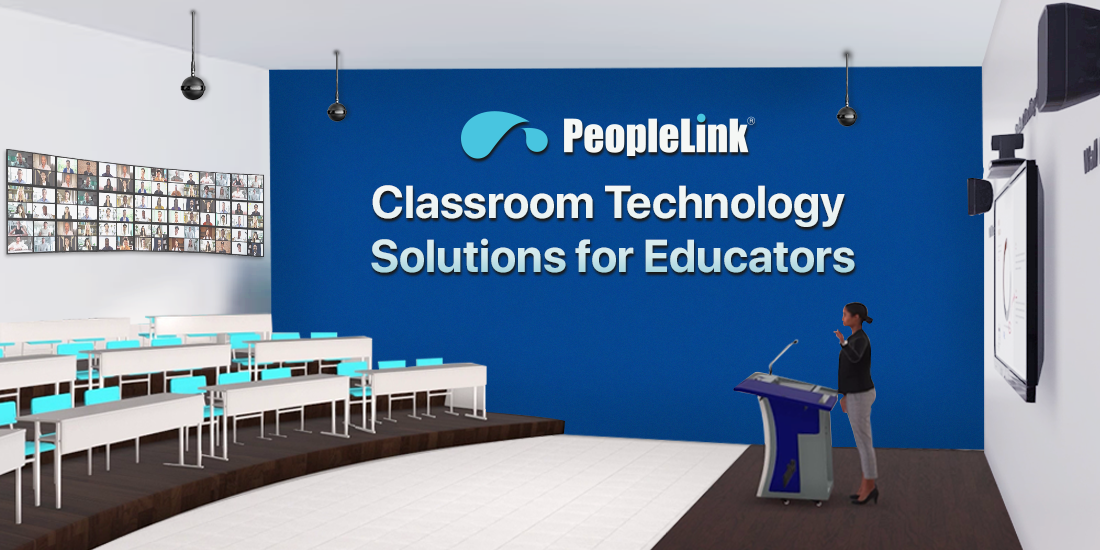
The rapid advancement of technology has transformed educational environments, moving beyond traditional blackboards and textbooks. Educators now have access to a diverse array of tools and resources that enhance interactivity, immersion, and enjoyment in the learning process. This technological evolution has fundamentally changed the methods of teaching and learning, providing an expansive array of opportunities for both instructors and students. In this blog, we will discover:
- Latest classroom technology solutions
- Importance of classroom solutions
- Pros and cons of using classroom technology
- 5 best classroom technology tools for educators
Introduction to Classroom Technology Solutions
Classroom technology solutions serve as essential tools to enhance the teaching and learning experience. The marketplace offers a variety of these solutions, ranging from simple projectors to advanced virtual reality systems. At Peoplelink, we provide a range of virtual classroom solutions, including interactive whiteboards, high-definition video conferencing, breakout rooms, content sharing, live chat and polling, recording and archiving, all with mobile compatibility for a seamless educational experience.Many educational institutions have found that the integration of advanced technology has markedly enhanced student learning. This approach has led to increased engagement and motivation, while helping students develop essential skills such as critical thinking, problem-solving, and collaboration, which are crucial for success in the digital era.
Classroom technology solutions have significantly enhanced the effectiveness of teaching methodologies. These solutions present a wide array of tools and resources that educators can employ to engage students and facilitate enjoyable learning experiences.
5 Best Classroom Technology Tools for Educators
Having analyzed the advantages and disadvantages of implementing technology in the classroom, we shall now examine some of the most effective tools available to educators. These resources, often developed using advanced software principles similar to those used in ecommerce software development, can significantly enhance your efforts to foster a more engaging, interactive, and productive learning environment for students.Tool #1: Interactive Display Boards
Interactive display whiteboards, or digital boards, are large touch-screen devices mounted on walls. They serve various functions, particularly in education, where teachers use them for presentations, brainstorming, and collaboration. These boards enable the display of images, videos, and multimedia content, significantly transforming classroom dynamics. By replacing traditional instructional methods, educators can create a more engaging and enjoyable learning experience for students.
Tool #2: Video Conferencing Platform
Video conferencing is an online platform that enables remote connections between educators and students, simulating the dynamics of in-person interactions. Often referred to as video conferencing software, it is primarily used by teachers to conduct online classes hosted in the cloud with internet access. This technology plays a significant role in fostering global communication and connectivity.
Tool #3: Audio Conferencing
Audio conferencing is an essential technological tool for educators, as it enables effective communication between instructors and students, regardless of their locations. This technology supports virtual discussions, collaborative activities, and personalized sessions, enhancing engagement in hybrid or remote learning environments. With high-quality audio, educators can provide real-time feedback and facilitate connections with experts, expanding educational opportunities beyond the traditional classroom. Ultimately, audio conferencing promotes an interactive and inclusive educational experience, making it a vital resource in modern education.
Tool #4: Epodiums
E-podiums are a vital technological resource in educational settings, enhancing teaching and learning experiences. These integrated solutions combine interactive displays, microphones, and cameras, enabling educators to manage lessons easily while engaging students. E-podiums facilitate the presentation of multimedia content, annotation, and virtual interactions efficiently, fostering a dynamic environment that bridges in-person and remote learning. As such, they are powerful tools for improving student engagement and accommodating diverse learning needs.
Tool #5: Camera Devices
Camera devices are designed for classroom installation, allowing educators to record lectures and presentations, as well as conduct online classes. This technology is significant as it enables the sharing of recorded content with students. If a student misses a class, they can learn by reviewing the recording. Additionally, those who struggle with certain concepts can access the videos multiple times until they achieve a clear understanding.
Pros and Cons of Using Classroom Technology
Pros of Using Classroom Technology
Pro #1: Make Learning More Fun and Interactive: The key advantage of modern classroom technology is its capability to make learning more interactive and engaging for students. Instead of passively listening to lectures, students can participate in educational games, watch instructional videos, and collaborate on projects. These activities capture attention and foster engagement, leading to increased participation and inquiry, which ultimately enhances retention of the material.
Pro #2: Accurate and instant Information: The integration of classroom technology provides students with immediate access to a wealth of information. With a few clicks, they can obtain accurate and current data on various subjects, enhancing their ability to engage in self-directed learning. This access not only acts as a round-the-clock mentor but also keeps students informed about current events, thereby promoting their development as critical thinkers and problem solvers.
Cons of Using Classroom Technology
Cons #1: Distraction: Classroom technology offers both benefits and challenges. While it can enhance the learning experience, it may also distract students from their academic responsibilities. Frequent checks of mobile devices can undermine concentration. Therefore, educators must establish clear guidelines for technology use and monitor student engagement to ensure they remain focused on their studies.
Cons #2: Digital Divide: A notable drawback of classroom technology is that some students may be left behind. Despite living in the digital age, not all students have equal access to technology, creating a digital divide. This situation disadvantages those without adequate resources. Therefore, educators must recognize this issue and offer additional support to ensure access to computers and the Internet in the classroom.