
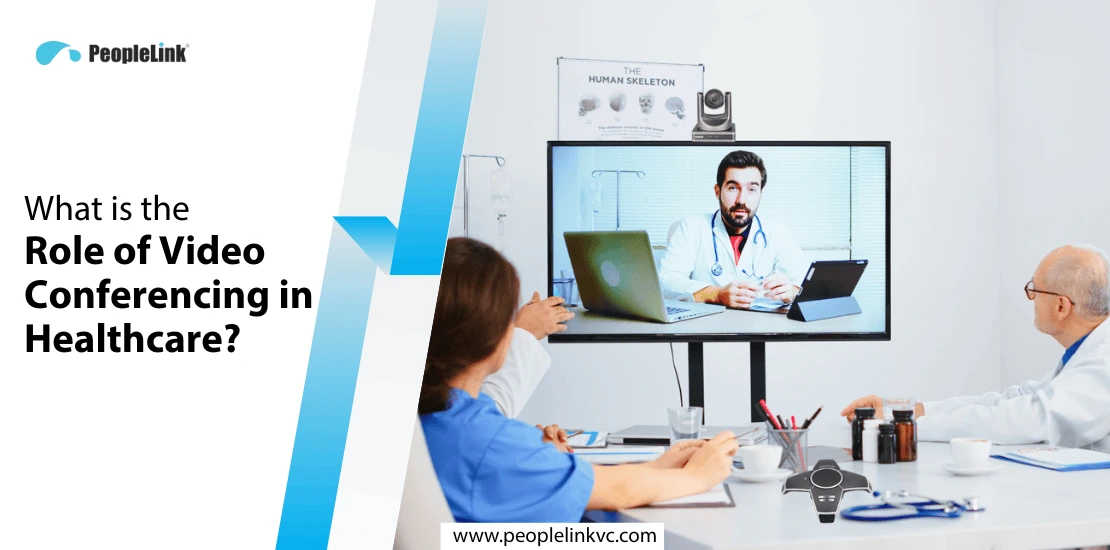
Video conferencing in healthcare is a technology that allows doctors and patients to see and hear each other from different locations. However, its role goes far beyond basic communication with patients.
In modern healthcare, Its true role is to act as a tool for complete medical work. It is used to perform specific medical actions that were once only possible in person. These actions include diagnosing illnesses, checking a patient’s symptoms visually, and guiding staff through complex procedures from a distance.
It is the new standard for delivering patient care services when the patient and doctor are apart. This technology ensures that specialized expertise can reach any patient, anywhere, quickly and safely. In this guide, we explore these seven specific jobs that this technology performs in much more detail.
7 Roles Video Conferencing in Healthcare
Role #1: Remote Specialist Access & Stroke Networks
In healthcare, the most fundamental job of video conferencing is to act as a Connector. It builds a bridge between a patient who needs help and a doctor who has the answers, regardless of the distance between them.
When we say video acts as a connector, we mean it removes the barrier of physical location. It ensures that expert medical care is not just for people who live in big cities. It brings that expertise directly to patients in small towns or remote areas.
The Concept of the Digital Door
Think of a standard hospital room door. When a doctor physically walks through that door, they are present and ready to help. Video conferencing creates a digital door. It allows a specialist to virtually enter a patient’s room instantly, even if they are hundreds of miles away.
This is most useful in emergencies where speed is critical. A prime example is stroke care.
Real-World Example: Speed in Stroke Care
When a person has a stroke, every minute matters. In the traditional system, connecting to a specialist was slow. An emergency doctor would call an operator, the operator would page a specialist, and everyone would wait for the specialist to call back. This is called a phone tag, and it wastes valuable time.
Video conferencing changes this workflow completely. Advanced systems are designed to connect the local team to a specialist in under 45 seconds.
Because of this speed one of the key advantages of telemedicine the specialist can be on the screen and ready to work before the patient even returns from their initial scans. They can see the patient, ask questions, and make life-saving decisions immediately.
Why This Matters
This connection does more than just save time. It creates fairness. It ensures that a patient in a small community hospital receives the same level of expert assessment as a patient in a major medical center. The video connection makes the location of the patient irrelevant.
- Feature: The system allows for instant, one-touch connections that bypass traditional phone operators.
- Benefit: This saves critical minutes during an emergency, allowing treatment to start immediately to prevent permanent damage.
Role #2: Visual Triage and Remote Diagnostics
Video conferencing does more than connect people. It acts as a Problem Solver. It helps doctors and nurses fix specific issues that happen when they cannot be in the same room as the patient.
One major problem in healthcare is uncertainty. Unlike a standard video conference with a doctor, a phone call makes it hard to know how sick a patient is just by listening to their voice.
Solving the Uncertainty Problem
Consider a parent who calls a nurse because their child has a fever. On a standard phone call, the nurse cannot see the child. To be safe, the nurse might tell the parent to go to the emergency room, even if it is not necessary. This wastes time and resources.
Video solves this problem by adding visual proof. A nurse can use video to look at how the child is breathing. They look for specific signs, like if the child’s nostrils are flaring or if they are struggling to catch their breath.
If the nurse sees the child playing and smiling on the screen, they might decide the child is safe to stay home. This process is called visual triage. It solves the problem of unnecessary hospital visits by helping the medical team separate those who are truly sick from those who are not.
Solving the “Hands-On” Problem
Another problem in healthcare remote solutions is that doctors cannot touch the patient. In medicine, touch is often used to find injuries. Video conferencing solves this by letting the remote expert use the hands of the person who is physically there, such as a paramedic.
- Feature: High-definition video allows nurses to see physical clues like breathing patterns or skin color clearly.
- Benefit: This helps medical staff separate true emergencies from minor issues, ensuring patients only go to the hospital when they really need to.
Role #3: Surgical Telementoring and Virtual Tumor Boards
In healthcare, video conferencing acts as an Enabler. This means it allows doctors to do things that were previously impossible without being in the same room. It gives them new tools to teach, learn, and work together on complex cases.
Enabling Surgical Guidance
One of the most powerful ways video enables doctors is inside the operating room. Sometimes, a surgeon might face a difficult step during an operation. In the past, they were on their own. Now, they can use video to connect with a world-class expert instantly.
This is not just about watching. The expert can virtually “scrub in” to help. They see exactly what the operating surgeon sees through the camera.
The system allows the expert to draw lines directly on the video screen. This medical technology, called telestration, lets them mark safe paths. The expert can mark safe paths for cutting or highlight dangerous areas to avoid. It is like having a teacher guiding their hand, ensuring the surgery is safe and successful.
- Feature: The software includes tools that let remote experts draw lines or circle areas directly on the surgeon’s screen.
- Benefit: This guides the operating surgeon’s hands in real-time, making complex surgeries safer and more successful.
Enabling Team Collaboration
Video also enables large teams of doctors to work together on difficult diseases like cancer. These meetings are often called tumor boards. In these meetings, many specialists must look at different pieces of information at the same time.
Video software enables this by creating a shared digital workspace. It allows the screen to be split into different views. On one side, a pathologist can show a zoomed-in view of cells under a microscope. On the other hand, a radiologist can show MRI scans of the patient.
By seeing all this information together on one screen, the team can discuss the case and create a better treatment plan. This level of collaboration helps ensure that nothing is missed.
Role #4: Mobile Emergency Response (Ambulance Telehealth)
Video conferencing plays a vital role as an Equalizer. This means it helps make patient care services fair for everyone. It ensures that a person living in a small, remote village can get the same quality of care as someone living in a big city near a major hospital.
Bridging the Gap Between City and Country
In the past, where you lived often determined if you survived a medical emergency. Large cities usually have hospitals with the best equipment and specialists. Small towns often do not. Video conferencing fixes this imbalance. It allows top experts to see patients anywhere, instantly.
- Feature: The technology works over mobile networks to connect ambulances to hospitals while the vehicle is moving.
- Benefit: This allows doctors to diagnose severe conditions on the road, ensuring the ambulance goes straight to the right hospital.
Bringing the Doctor to the Ambulance
A powerful example of this is used in ambulances. This is often called mobile telestroke.
Usually, an ambulance takes a patient to the nearest hospital. But for a severe stroke, the nearest hospital might not have the right tools to help.
With video in the ambulance, a specialist can examine the patient while they are still on the road. They can look for signs of a very dangerous type of stroke. If they see these signs, they can tell the driver to skip the small local hospital.
Instead, they direct the ambulance to go straight to a larger hospital that can perform the necessary surgery. This saves hours of time. It gives a patient in a rural area a much better chance of recovery. By using video this way, we ensure that specialized care is available to everyone, not just those who live close to it.
Role #5: Clinical Workflow Efficiency & Care Coordination
Video conferencing also acts as an Optimizer. This means it helps hospitals run smoother and waste less time. In patient care management, it is very important to use doctors and rooms for the patients who need them most. Video helps make sure this happens.
Saving Time for Specialists
A good example of this is in skin care, or dermatology. Often, a skin doctor is very busy. In the past, every patient with a funny spot on their skin had to drive to the clinic for a visit.
Now, doctors can use high-quality video to look at the spot first. They check if the spot looks dangerous or safe. If it looks dangerous, the doctor brings the patient in immediately for surgery. If it looks safe, they can just monitor it. This ensures the doctor spends their time operating on the people who truly need it.
Preventing Mistakes When Moving Patients
Another way video optimizes care is when a patient moves from a hospital to a nursing home. This is a risky time because information can get lost. To improve communication in patient care, hospitals use video meetings to bring everyone together before the patient moves. The hospital doctor, the pharmacist, and the nursing home team all meet on the screen. They look at the patient’s medicine list together.
This face-to-face meeting helps them catch mistakes, like the wrong medicine dosage, before the patient leaves. By fixing these errors early, they prevent the patient from getting sick again and having to return to the hospital. This keeps hospital beds open for new emergencies.
- Feature: The platform creates a virtual meeting room where pharmacists, doctors, and nurses can view patient charts together.
- Benefit: This catches medication errors before a patient goes home, preventing dangerous mistakes and read missions.
Role #6: Remote Patient Monitoring & Chronic Care
Video conferencing plays a crucial role as a Stabilizer. This means it helps keep a patient’s health steady over a long period. This is especially important for people with long-term conditions, like heart failure, who need constant care to stay healthy.
Keeping a Watchful Eye
For these patients, small changes in health can turn into big problems very quickly. In the past, doctors could only check these changes during a hospital visit. If a patient skipped a visit, they might get very sick without knowing it. Video supports effective home service health care by allowing frequent, quick check-ins from the comfort of the living room.
The Patient as a Partner
To make this work, patient engagement is critical. The patient becomes an active partner in the exam, as the doctor guides them to do specific movements on camera to check their heart function.
The Bending Test
Another useful test is called the bending test. The doctor asks the patient to stand up and bend over, as if they are tying their shoes. The doctor watches them on the screen.
If the patient runs out of breath within 30 seconds of bending over, it tells the doctor that fluid is building up in the body. By seeing this early, the doctor can change the patient’s medicine immediately. This stabilizes the patient and stops them from having a heart attack or needing an emergency hospital stay.
- Feature: The camera uses powerful zoom to show tiny details, such as a pulsing vein in the neck.
- Benefit: This allows doctors to spot early warning signs of heart failure from the patient’s home, keeping them healthy without a hospital visit.
Role #7: Patient Safety Verification & Home Health
Finally, video conferencing acts as a Guardian. This means it works to protect patients from errors, accidents, and false alarms. In healthcare, relying only on machines or phone calls can sometimes lead to mistakes. Video adds a layer of safety by allowing a professional to see the truth with their own eyes.
Checking the Truth Behind the Numbers
A common example of this happens with home health monitors. Many patients connect a patient monitoring system at home to check their blood pressure. Sometimes, these machines send a high alert to the nurse.
Without video, the nurse might think the patient is having a heart emergency. But with video, the nurse can look at the patient first. They act as detectives.
The nurse might see that the patient is sitting with their legs crossed. Or maybe they are wearing a thick sweater under the blood pressure cuff. These simple things can cause a machine to give a wrong reading. The nurse can tell the patient to uncross their legs or roll up their sleeves and try again. By seeing this, the nurse stops a false alarm and prevents unnecessary panic.
Preventing Falls at Home
Video also acts as a guardian against accidents in the home. When an older patient returns home after a hospital stay, they are at high risk of falling.
Therapists use video to perform a safety check of the house. They ask the patient or a family member to walk around with a camera. The therapist acts as a “fly on the wall.”
They look for dangers that the patient might not notice. They might spot a loose rug or a messy electrical cord on the floor. By pointing these out and fixing them, the therapist helps make the home safe. This prevents falls and keeps the patient from ending up back in the hospital.
- Feature: The video feed provides a wide, clear view of the patient’s living environment.
- Benefit: This lets therapists spot hidden dangers like loose rugs, helping to prevent falls and keep older patients safe at home.
How PeopleLink Fulfill These 7 Roles
Knowing these 7 roles is the first step. The next step is ensuring your facility has the power to perform them. To make the 7 roles of healthcare reality, you need the right healthcare technology. PeopleLink provides the specialized hardware that allows doctors to perform these roles from miles away.Here’s is the glimpse of what is possible with PeopleLink:
1. Powering the “Stabilizer” and “Problem Solver” Roles
To be a Stabilizer, a doctor needs to see tiny details, like a vein pulsing in a neck or a chest rising. A standard laptop camera is too blurry for this.
PeopleLink solves this with High-Definition PTZ Cameras (Pan-Tilt-Zoom). In our portfolio, we have Elite 4K Series or Elite XL Series cameras which come with powerful optical zoom (up to 30x). This allows the doctor to zoom in close enough without the picture getting pixelated or fuzzy. It gives them the visual proof they need to solve the problem.
2. Powering the “Equalizer” and “Connector” Roles
To be an Equalizer, the technology must reach the patient wherever they are whether that is in a rural clinic, an ambulance, or a hospital bed. PeopleLink powers this with the Telehealth Cart. This is a specialized medical station on wheels. It holds the camera, the screen, and the medical computer securely. Nurses can simply roll this cart to a patient’s bedside. It instantly turns any room into a specialist’s office. This mobility ensures that every patient, no matter which room they are in, has equal access to the best doctors.
3. Powering the “Enabler” Role
To be an Enabler in the operating room, a surgeon needs to see more than just faces. They need to see the surgery itself. PeopleLink powers this with Operating Theater (OT) Solutions. These systems connect directly to the hospital patient monitoring system and devices like endoscopes (cameras that go inside the body). This hardware takes the video feed from inside the patient and streams it to the expert. It allows for the “Telestration” we discussed, where an expert can draw on the screen to guide the surgery live.
Equipping Your Team for the New Standard of Care
We are entering a new era of medicine. It is a time where the quality of your care is not defined by your zip code. By understanding these 7 roles, we can see that video conferencing is more than a convenience. It is the bridge that connects the best doctors to the people who need them most. To cross this bridge, hospitals and clinics must be ready. This means investing in the right technology used in healthcare that your team can trust. Your team needs technology that acts as a true partner.If you are ready to bring this level of care to your patients, PeopleLink is here to help. We invite you to reach out to us today. Let us help you find the right tools to equip your team for the future of healthcare.